Certification Timelines Dictate Funding Pathways in Interstate Digital Wagering Networks
Written by Theo Simon · Aug 20, 2026
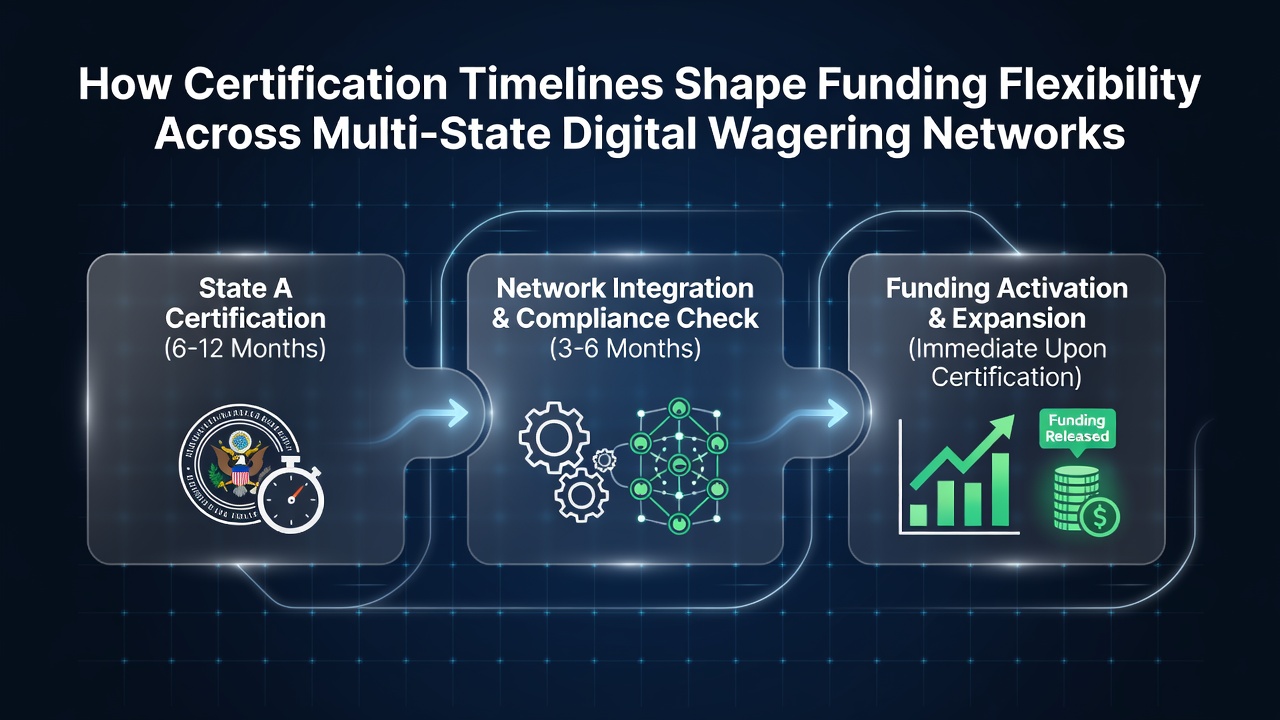
Certification Timelines Dictate Funding Pathways in Interstate Digital Wagering Networks
Certification timelines for digital wagering platforms create direct effects on how operators access and move capital across state lines, and data from regulatory filings show that approval cycles lasting six to eighteen months alter revenue recognition patterns in measurable ways. Operators must align product launches with staggered state requirements, which means funding commitments from investors often hinge on the earliest possible certification date rather than market demand alone.
State-by-State Approval Durations and Capital Timing
Multi-state networks face certification processes that differ sharply by jurisdiction, with some states completing technical and financial reviews in under four months while others extend evaluations beyond twelve months due to detailed security audits and compliance checks. These variations force operators to sequence their market entries, and longer timelines in one state can delay pooled funding that supports operations elsewhere. Research from industry reports indicates that platforms targeting five or more states typically stagger their certification applications by three to six months to maintain steady capital inflows from early revenue-generating markets.
Payment processing certifications add another layer because states require separate validations for e-wallet integrations and banking partnerships before funds can flow. When one state's certification lags, operators report restricted access to shared liquidity pools, which limits promotional spending and user acquisition campaigns in faster-approved regions. Figures from August 2026 filings reveal that several networks adjusted their capital allocation models after certification backlogs in two Midwestern states pushed projected revenue recognition by an average of seven months.
Investor Structures and Certification Dependencies
Funding agreements frequently include milestone clauses tied to certification milestones, and private equity groups structure tranches around expected approval dates from key states. When timelines slip, subsequent funding rounds face renegotiation or reduced valuations because projected cash flows shift later in the calendar. Observers note that this dependency encourages operators to prioritize states with predictable certification windows, even when those markets offer lower user volumes than slower jurisdictions.
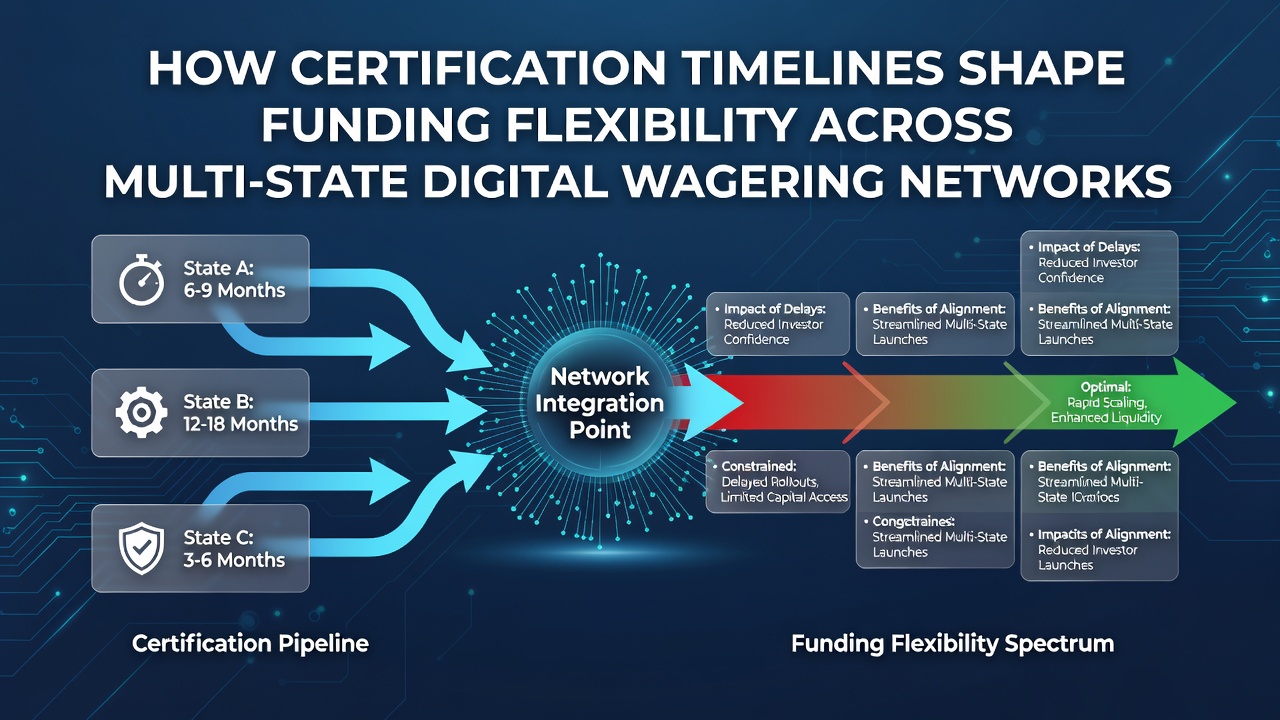
Case examples from 2025 and 2026 show networks that secured early certification in two Atlantic states gaining faster access to working capital for expansion into additional territories. Conversely, platforms caught in extended review cycles in western states experienced tighter credit terms from lenders who viewed delayed approvals as increased operational risk. Data compiled by the American Gaming Association tracks these patterns and links certification velocity to measurable differences in quarterly funding flexibility across reporting operators.
Technical and Compliance Overlaps Across Jurisdictions
Shared technical standards for random number generators, user authentication, and transaction logging allow some components of certification to transfer between states, yet each jurisdiction still conducts independent financial solvency reviews and operational audits. This partial overlap reduces duplication but does not eliminate sequential delays because states rarely accept another jurisdiction's full certification package without supplemental documentation. Networks that maintain dedicated compliance teams report shorter effective timelines when prior state approvals supply baseline evidence, and this advantage translates into earlier revenue deployment for marketing and platform upgrades.
Cross-border data sharing agreements between regulators have shortened certain verification steps in recent years, and August 2026 updates from several state agencies confirm expanded use of mutual recognition for non-financial components. Even with these efficiencies, operators must still navigate separate bonding requirements and tax remittance setups that affect net capital availability once certifications clear.
Conclusion
Certification timelines function as gatekeepers for funding flexibility in multi-state digital wagering networks because they control when operators can recognize revenue and access committed capital across different regulatory environments. States with shorter, more predictable approval cycles enable faster capital rotation, while extended reviews create bottlenecks that reshape investment structures and market entry sequences. Available data from regulatory filings and industry associations demonstrate consistent correlations between certification speed and liquidity management outcomes, and networks continue to adapt their operational calendars around these timelines to maintain competitive positioning.